

Audible should have been unstoppable.
It invented the modern audiobook category. It normalized listening to books on phones. It built deep publisher relationships before anyone else took audio seriously. Then it was acquired by Amazon, a company famous for operational excellence, infrastructure dominance, and relentless customer obsession.
On paper, Audible had every advantage required to become the definitive audio knowledge platform of the internet.
In practice, Audible has become something else entirely. A comfortable, old, stodgy incumbent.
A product that coasts on early success. A platform that extracts value from its position rather than reinvesting aggressively in the listener experience and delivering a better experience to customers.
Audible still works. But that is the problem.
It works just well enough that most people do not leave. It does not work well enough to inspire loyalty, excitement, or admiration. Users tolerate Audible because the alternatives are fragmented and switching is difficult, not because Audible feels exceptional.
This review is intentionally critical. Audible still does several things extremely well. But measured against where consumer software has gone, and where audio learning should be heading, Audible feels stagnant.
Timeline of Stagnation
Understanding Audible today requires looking at how little it has changed.
2013 - 2016
Audible rides the smartphone wave. Mobile listening becomes mainstream. Playback controls, chapters, bookmarks, and basic library management are enough because the category itself is new.
2017 - 2019
Whispersync launches and becomes Audible’s most meaningful innovation. Seamless handoff between ebook and audiobook is genuinely useful. It also marks the last feature that meaningfully expanded how people use audiobooks.
2020 - 2021
Audible Plus is introduced. This is framed as value for users, but in reality it is a catalog and retention strategy. It does not meaningfully improve discovery, usability, or personalization.
2022 - 2024
The app increasingly resembles a storefront. Promotions, featured collections, seasonal pushes, and upsells dominate the experience. Core UX patterns remain largely unchanged.
2025+
AI transforms search, discovery, summarization, and personalization across media. Competitors experiment rapidly. Audible largely stands still.
For a product with Amazon’s resources, this lack of visible product velocity is striking.
Where Audible Still Wins
Audible’s continued relevance is not accidental. It still excels in several foundational areas.
Content Catalog
Audible’s catalog remains the largest and deepest in the industry. Major publishers, exclusive releases, original productions, and niche nonfiction are all represented.
For serious readers, Audible is often the only place where a specific title is reliably available in audio.
Narrator Quality and Production
Audible’s investment in narration quality still pays dividends. Professional narrators, consistent recording standards, and polished editing remain best in class.
Bad narration ruins audiobooks. Audible avoids that pitfall more consistently than competitors.
Playback Reliability
From a technical standpoint, Audible is stable. Downloads are reliable. Offline playback works. Sync issues are rare.
These fundamentals matter, especially for daily listening.
The problem is that fundamentals are not differentiation. They are table stakes.
And while these are all important positives, this isn't a blog about business moats and making more corporate money, it's about software. And building cool products.
And as a piece of software, Audible is stagnant.
UX Problems
Audible’s UX issues are not dramatic failures. They are more like death by a thousand cuts thousand small frictions.
The app feels like it has grown through incremental additions rather than intentional redesign.
Wishlist Friction
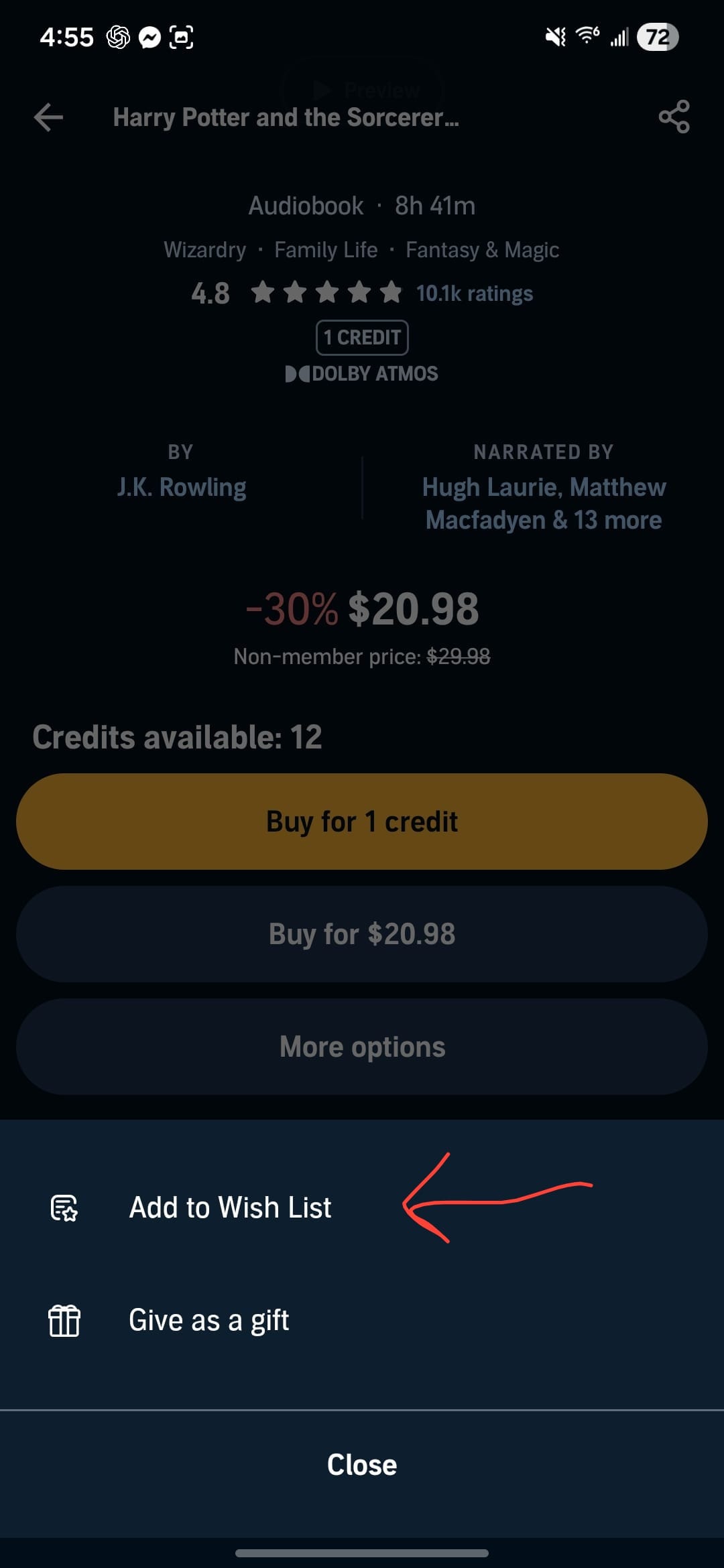
The Wishlist flow perfectly captures Audible’s priorities.
To add a book to Wishlist, a user must:
- Use Search or Discovery to find a book
- Open the book detail page
- Tap a secondary overflow menu
- Select a somewhat hidden “Add to Wishlist” link
This is absolutely absurd for a discovery driven product.
Wishlist is not an edge case feature. It is a core expression of user intent. It signals interest without commitment. It fuels future purchases. It supports browsing behavior. It even signals to Audible which books they should recommend to users.
Most modern commerce and content apps surface Wishlist or Save actions prominently and instantly, and then use that data to make the experience better.
Audible hides it.
That design choice reveals a deeper truth. Audible optimizes for pushing purchases now, not supporting thoughtful discovery over time.
Navigation and Information Architecture
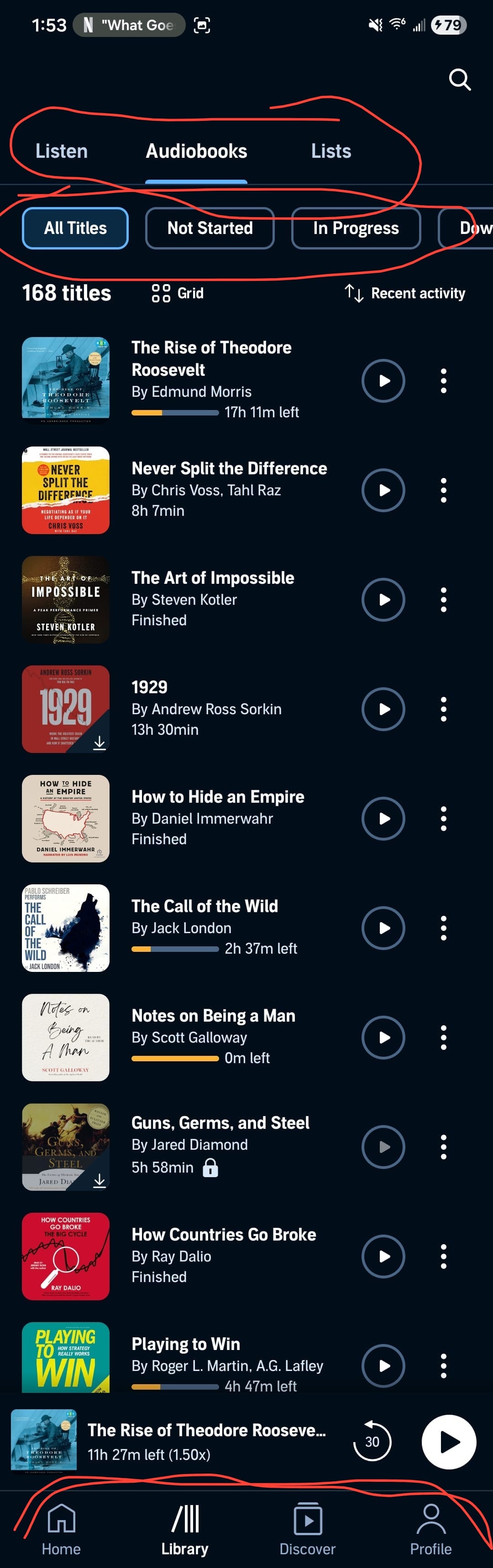
Audible’s navigation feels cluttered and redundant.
Home, Discover, and Library overlap conceptually but do not work together cohesively. Users bounce between surfaces that repeat similar content with different framing.
Common frustrations include:
- Difficulty distinguishing owned titles from Plus titles
- Inconsistent placement of key actions
- Too many promotional surfaces competing for attention
- Controls that feel designed for two handed use rather than one handed listening
- Notes and Clips buried behind non obvious menus
Nothing here is catastrophic. Everything here is annoying.
Over long term use, these annoyances compound.
Weak Recommendations and Discovery
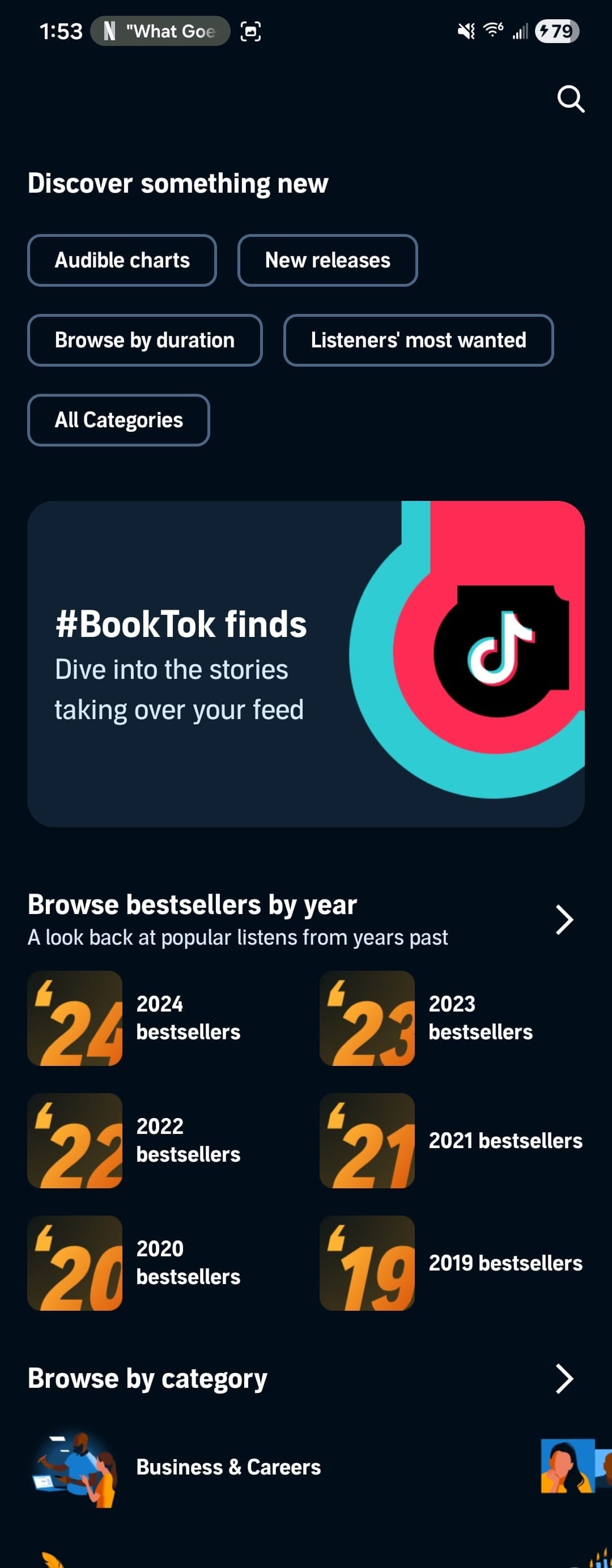
Discovery is where Audible feels most outdated.
Audible behaves like a digital bookstore, not an intelligent recommendation engine.
The app surfaces:
- Top charts
- Editor collections
- Seasonal promotions
- Sponsored placements
- Broad genre groupings
What it rarely surfaces is confidence.
Modern platforms make bold recommendations. They say, implicitly or explicitly, “We know you. Trust us.”
Audible says, “Here is what is popular.”
Billboard Versus Brain
Audible’s discovery experience feels like walking past a billboard, not having a conversation or receiving a recommendation.
Spotify builds taste profiles. Netflix builds viewing personas. TikTok learns faster than users can articulate preferences.
Audible does none of this convincingly.
Listening history does not translate into sharply tuned suggestions. Completion behavior is not leveraged well. Re listening patterns are ignored.
The result is discovery that feels shallow and generic, even for long time subscribers.
Notes, Clips, and Learning Tools
Audiobooks are increasingly used for learning, not just entertainment. Audible recognizes this in marketing language but not in product execution.
Notes and Clips Are Underpowered
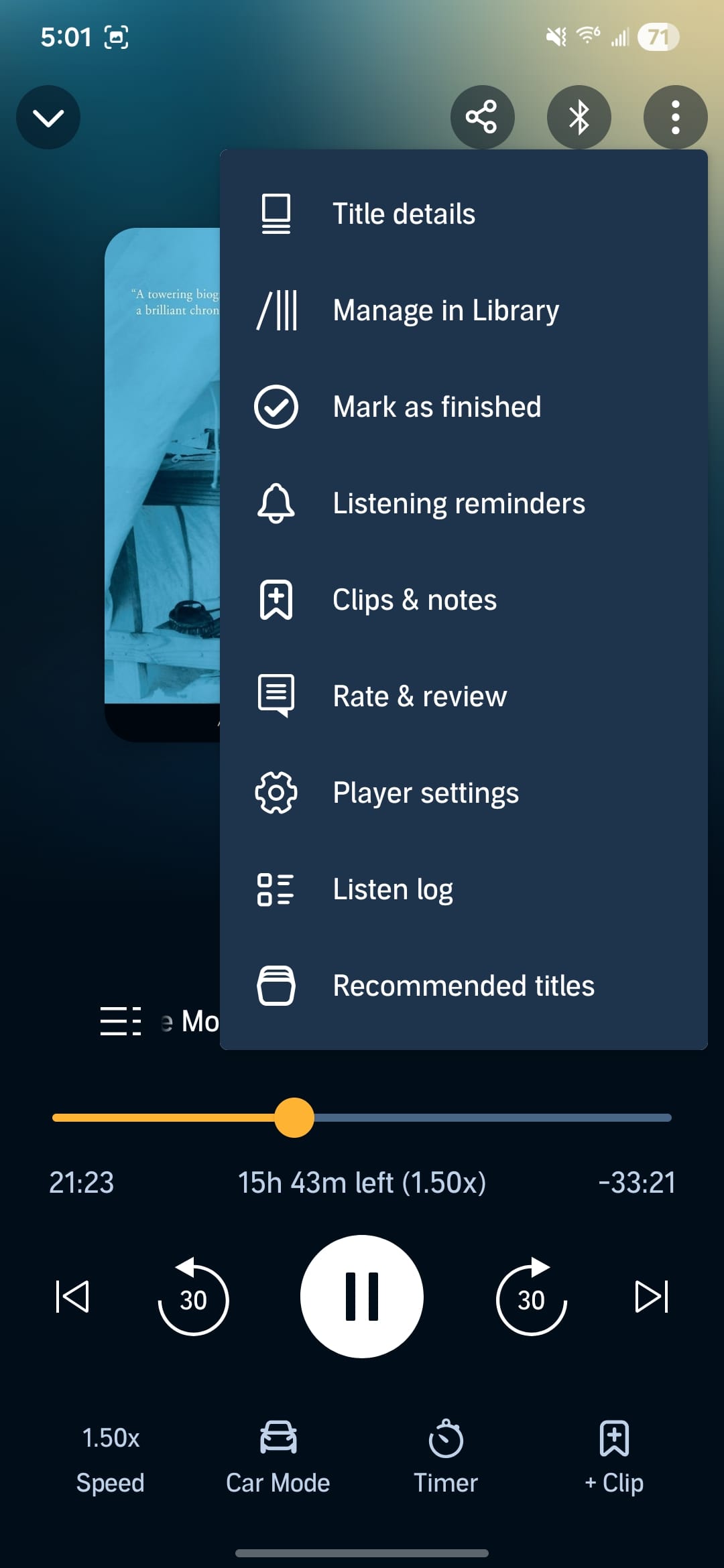
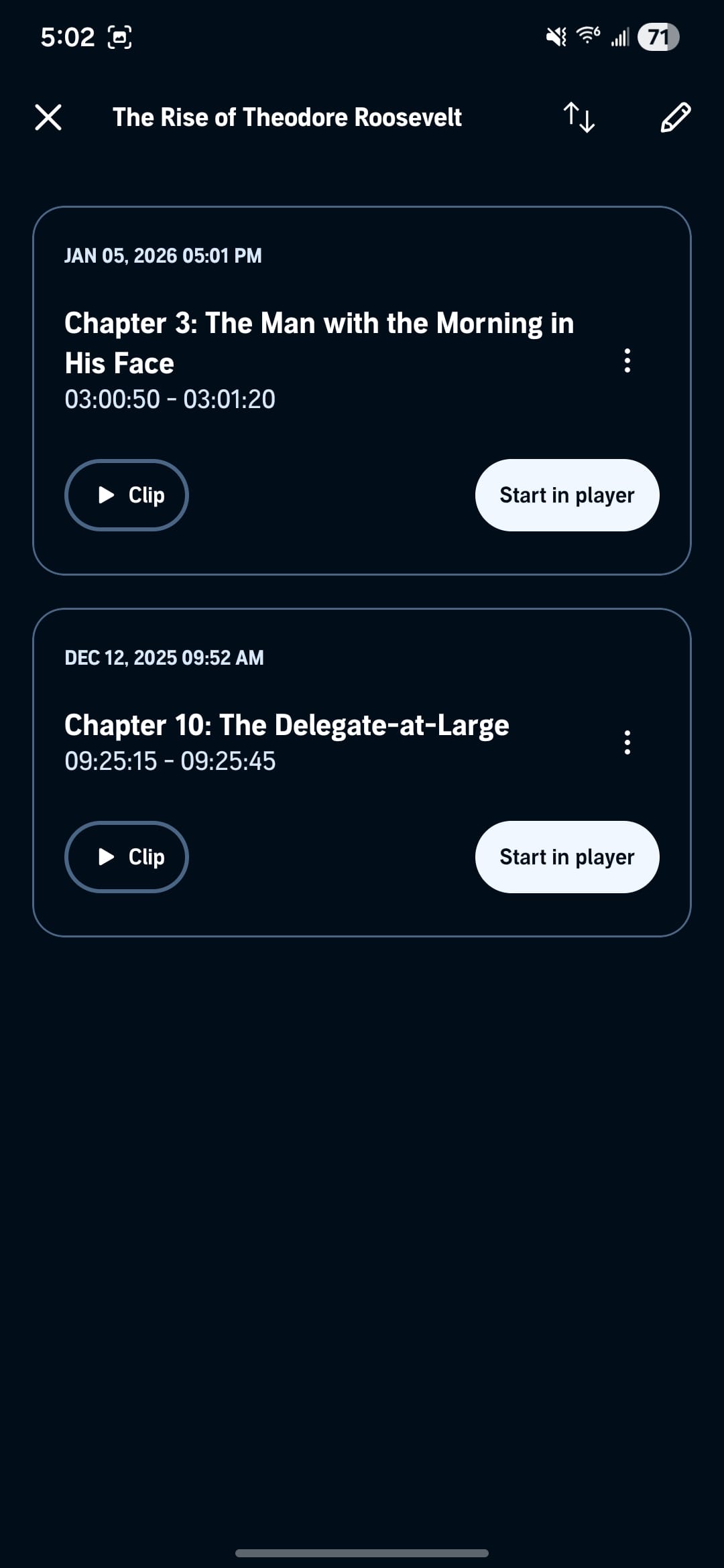
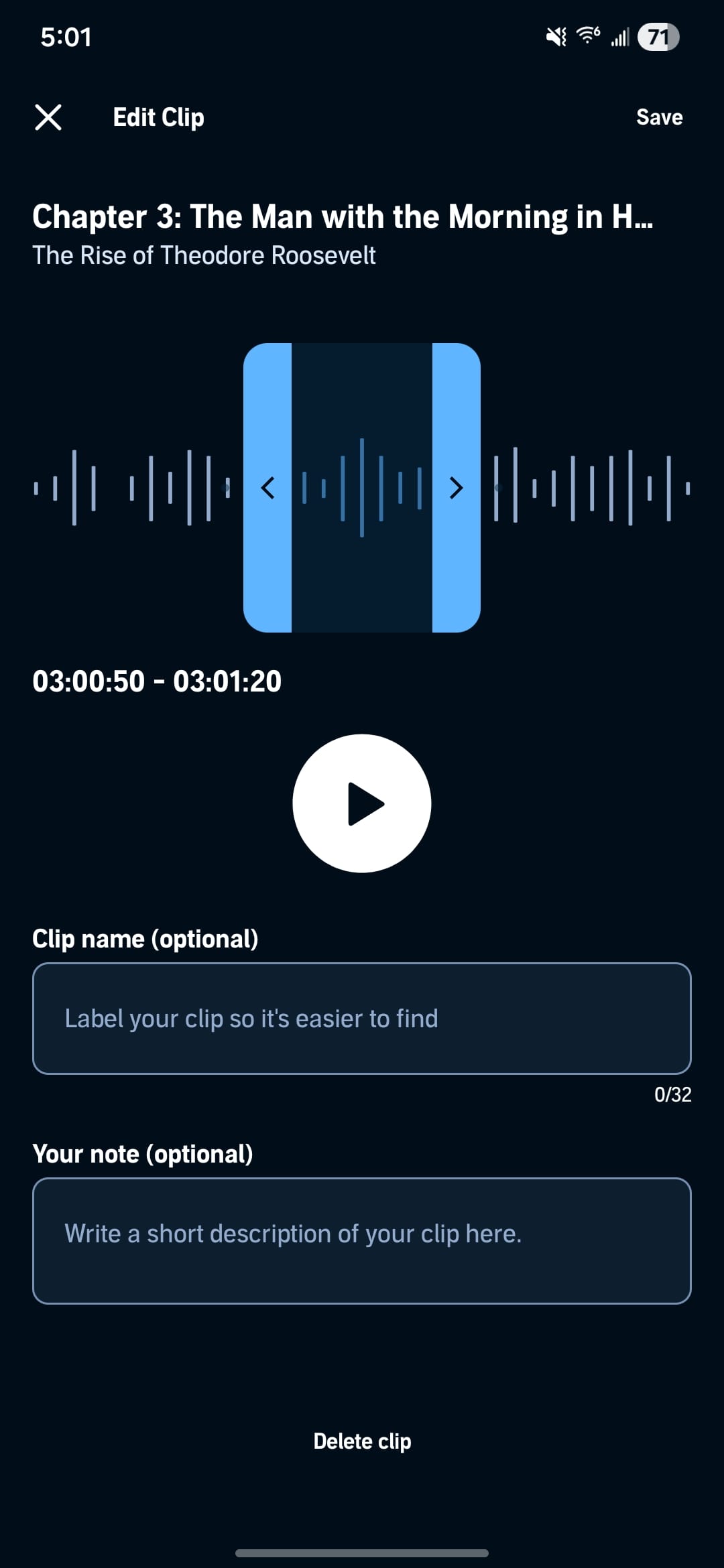
Notes and Clips exist, but they feel like afterthoughts.
They are:
- Hard to access
- Awkward to manage
- Poorly organized
- Not searchable in meaningful ways
- Not integrated into discovery or recall
For nonfiction listeners (like me), this is a massive missed opportunity.
Audio learning should support reflection, revisiting, and synthesis. Audible provides playback, not comprehension tooling.
No Feedback Loop
There is no sense that Audible learns from what you highlight or clip.
Those interactions should inform recommendations, summaries, and follow up content. Instead, they exist in isolation.
Low Product Velocity
The most damning critique of Audible is how little has changed.
In the past several years, Audible has not meaningfully expanded:
- How users discover books
- How users navigate long audio content
- How users reflect on what they listen to
- How users track progress or habits
- How users understand their listening patterns
There is no equivalent to:
- Spotify Wrapped
- Netflix viewing insights
- Kindle popular highlights
- Reading streaks
- Learning progress dashboards
Audible collects enormous amounts of listening data. It uses almost none of it in ways that benefit the listener.
Ownership and Portability
Audible’s DRM model remains one of its most user hostile aspects.
When users buy audiobooks on Audible, they do not truly own them.
They cannot:
- Export files freely
- Move books to other players
- Maintain long term independent archives
- Use third party tools without friction
This approach benefits Audible’s moat. It does not benefit users.
The argument that DRM is required for publisher relationships is increasingly weak. Music abandoned this model years ago. Video is slowly doing the same.
Audible’s restrictive ownership model reduces competitive pressure. When users cannot leave easily, product urgency declines.
Audible and AI
If there is one area where Audible’s absence is most glaring, it is AI.
Audio is uniquely suited for AI enhancement. Audible has the data, the scale, and the resources to lead. It has chosen not to.
What Audible Could Already Offer
- AI generated summaries for finished books
- Short refresh summaries for books revisited months later
- Chapter level heatmaps showing engagement peaks
- Auto generated topic maps for nonfiction
- Smart skipping to high value sections
- Personalized learning paths across multiple books
- Cross book synthesis for similar topics
None of this requires speculative technology. It requires product ambition.
Audible currently offers none of it.
Competitor Landscape
Audible’s dominance masks how much better other platforms are becoming in specific areas.
Spotify Audiobooks
Spotify understands discovery and personalization. It treats audiobooks as part of a broader taste graph. Its recommendation engine is already superior.
YouTube
YouTube’s strength is search and algorithmic discovery. It surfaces long form audio and spoken content with frightening efficiency. Though it's obviously not purpose-built for audio books, so this is a bit of a stretch.
Libro.fm
Libro emphasizes community, transparency, and human curation. It feels aligned with readers rather than optimized for extraction.
Libby
If you haven't heard of it, Libby offers a simpler, more humane experience for audio books. It is not as powerful, but it respects user intent and access. Though with a library card, it's totally free.
Audible wins on catalog depth. It loses on experience.
What Audible Should Build Next
Audible does not need to reinvent itself. It needs to catch up.
Modern Discovery
Audible should make confident recommendations driven by real listening behavior, not popularity charts.
One Tap Wishlist
This should already exist. It is foundational UX hygiene.
AI Summaries and Heatmaps
Audio deserves the same insight tools that text already has.
Annual Listening Wrap Up
Audible has more listening data than Spotify. It does nothing with it.
True Ownership or Interoperability
Portability should be a feature, not a threat.
Better Library Tools
Semantic search, filters by topic, listening velocity, and progress insights should be standard.
Learning Focused Notes and Clips
Notes should be searchable, summarized, and integrated into recall.
Better Products Score
| Category | Score | Notes |
|---|---|---|
| UX and Usability | 5 of 10 | Friction filled and outdated |
| Recommendation Quality | 4 of 10 | Generic and merchandising driven |
| Innovation and Velocity | 3 of 10 | Minimal progress |
| Ownership and Portability | 2 of 10 | Restrictive DRM |
| AI and Personalization | 2 of 10 | Largely absent |
| Content Catalog | 10 of 10 | Still unmatched |
Total Better Products Score: 4.8 of 10
Final Verdict
Audible is a paradox.
It is the largest audiobook platform in the world and one of the least ambitious consumer products in media. It relies on early mover advantage and ecosystem lock in rather than excellence.
Audible should define the future of audio learning, storytelling, and knowledge consumption. Instead, it behaves like a mature retailer protecting margins.
Innovation is overdue. Personalization is overdue. AI is overdue. Openness is overdue.
When it still takes three taps to add a book to a Wishlist, that is not a small UX issue. It is a signal.
Audible is no longer building for the future. It is maintaining the present.
For inquiries or collaboration: Email adam@adamtreister.com — I personally read every message.

